3D & SimulationCloners
Quantize Effector
Snaps the running clone transform to per-channel steps.
The Quantize Effector rounds each clone's position, rotation, and scale to a step, after the effectors before it have run.
- Position Step X / Y / Z, Rotate Step, Scale Step
- Found in the node graph under Cloners → Effectors
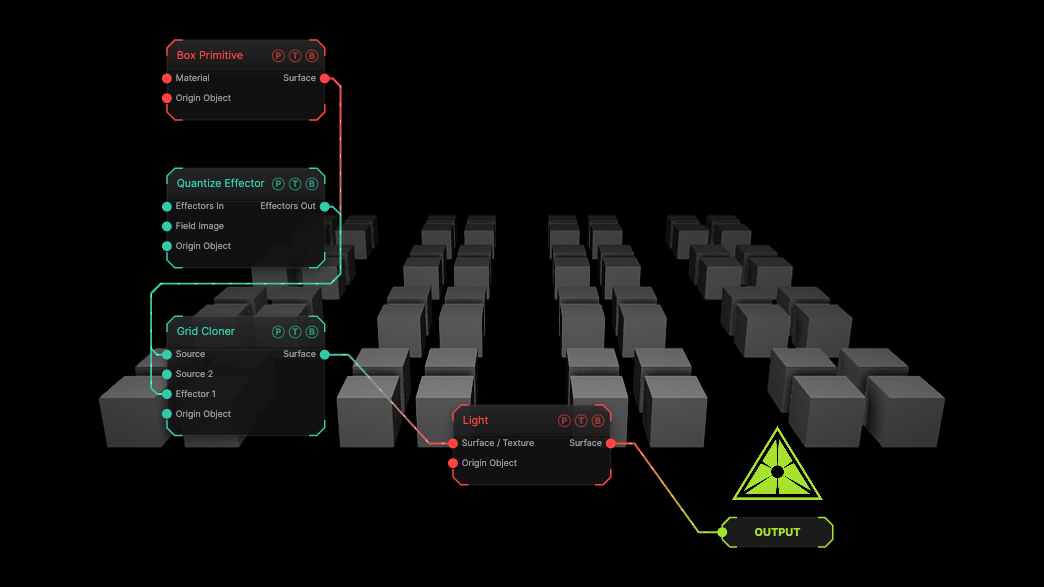
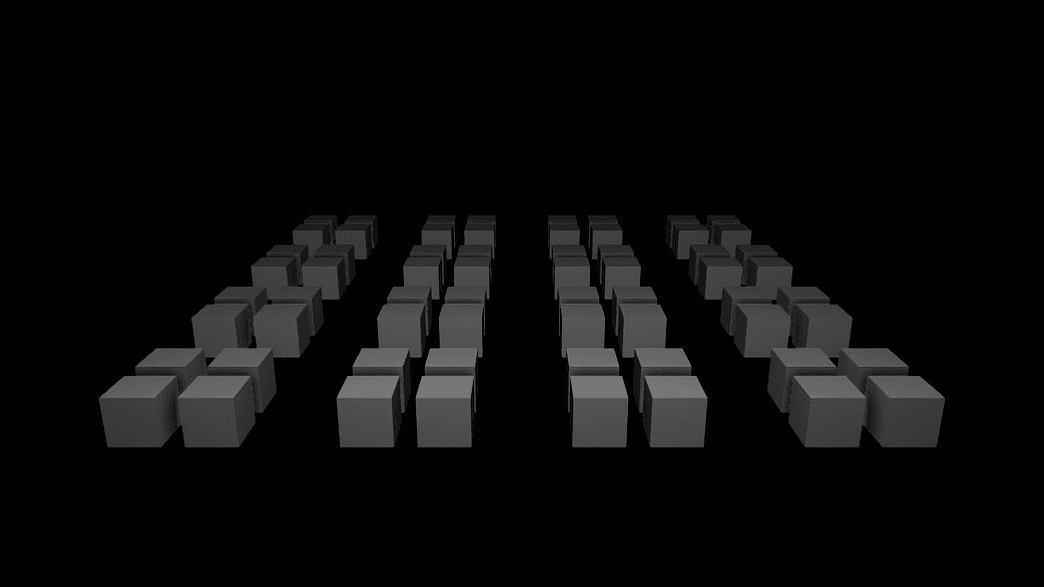
The image on the right is the example patch itself. Drag and drop it onto the app, or load it with File → Load, to open the full graph. Positions snapped to the default 0.5 grid.
Inputs and outputs
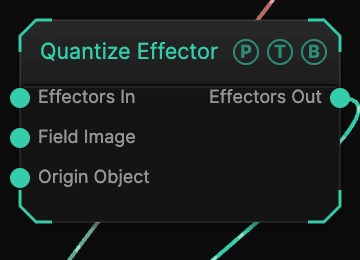
| Port | Type | Purpose |
|---|---|---|
| Effectors In | Effector | The previous effector in the chain. |
| Field Image | Texture | A texture read by the Image field shape. |
| Origin Object | Surface | A Null to parent to. |
| Effectors Out | Effector | Wire into the next effector or a cloner's Effector port. |
Parameters
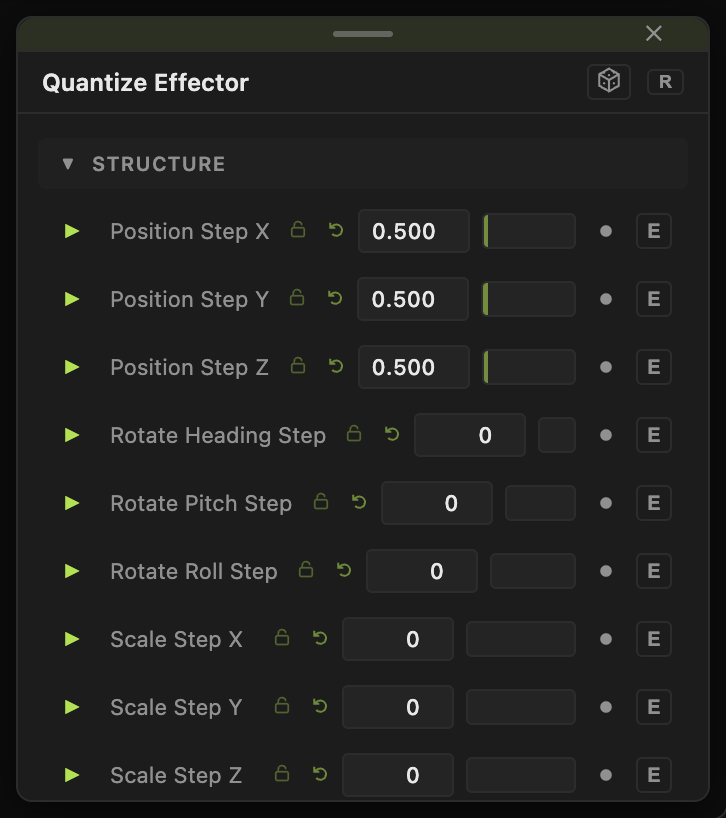
- Position Step X / Y / Z (0–10, default 0.5).
- Rotate Heading / Pitch / Roll Step (0–180, default 0).
- Scale Step X / Y / Z and Uniform Scale Step (0–2, default 0).
Field and clamp
- Field (default off), Field Shape, Field Size, Falloff, Inner Radius, Invert Field, Field Follows Mouse, Image Channel, and the Field Position / Heading / Pitch / Roll / Scale block limit where the effector acts.
- Clamp (default off) with Max Offset (default 5), Max Rotation (default 180), Min Scale (default 0), Max Scale (default 4).
- Highlight Field and Highlight Color draw the field in the viewport.
Every slider has a per-parameter animation bar, so it can be animated, audio driven, or MIDI mapped.
Examples
Voxel noise — a Noise Effector followed by this at Position Step 1.
Troubleshooting
Nothing changes — the effector's Effectors Out must land on one of the cloner's Effector ports.
Nothing snaps — put this after the effector whose output you want quantized.